Firebull Hot Air Stoves
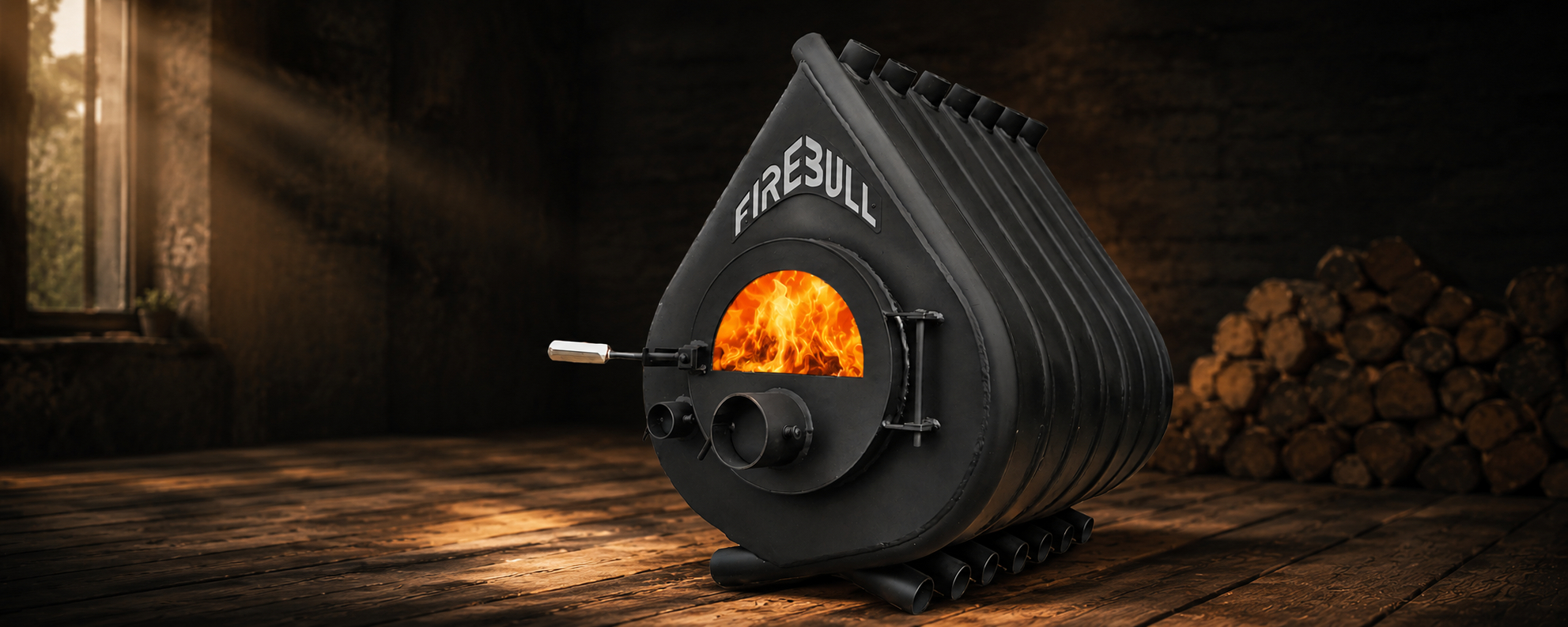
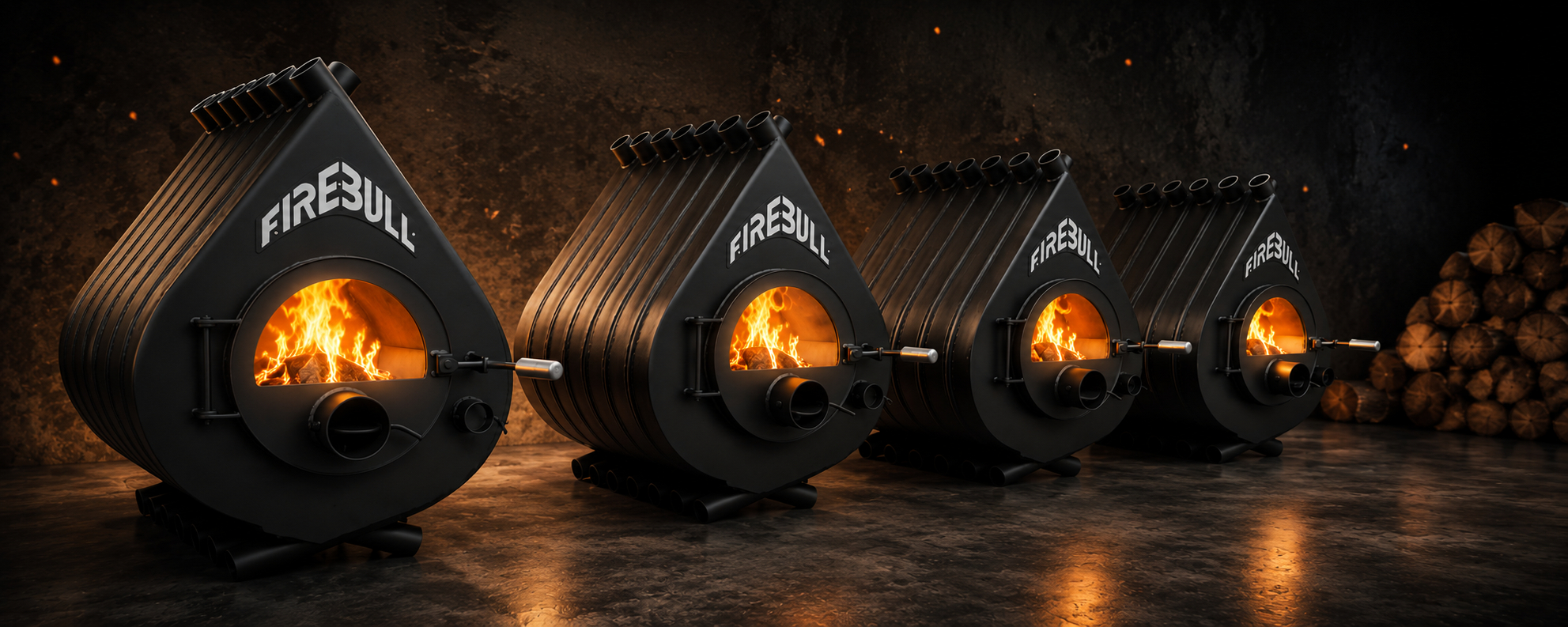


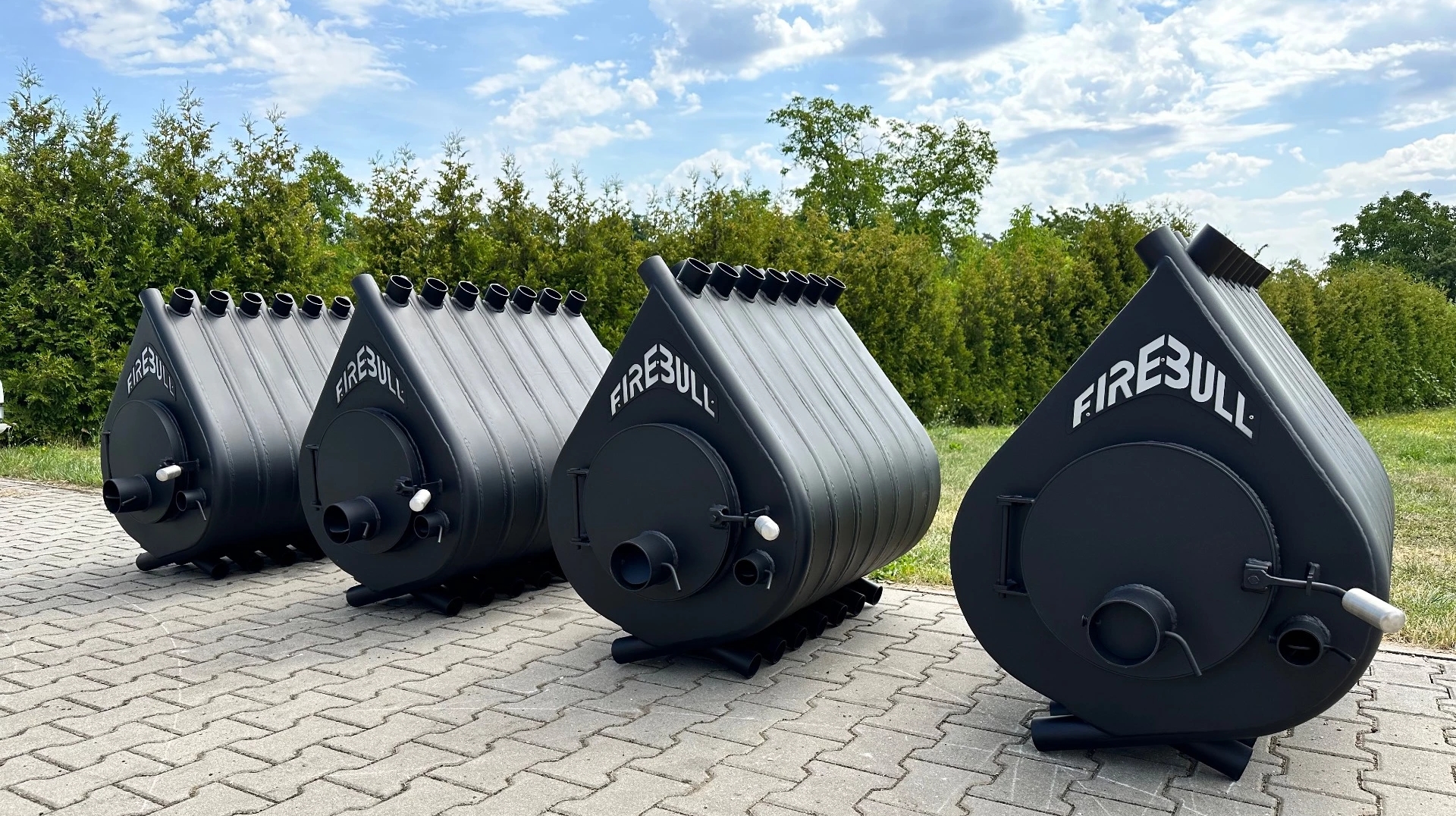
Firebull hot-air stoves are manufactured by the Czech company Laityng, which was founded in 1999. The company is located in the Hradec Králové Region in Chlumec nad Cidlinou. Since its establishment, the company has specialized in the production of performance exhaust systems and exhaust tips. In 2012, the idea was born to improve the tubular Canadian-style stoves that were already available on the market. Drawing on experience from a related industry, the development and production of Firebull stoves began. These wood-burning stoves now stand out for their high-quality workmanship, a wide output range of 6.5–45 kW, and above all their high efficiency, which ensures fuel savings and therefore a return on investment. Firebull tubular stoves have a service life of up to 20 years.
Applications of Firebull Hot-Air Stoves
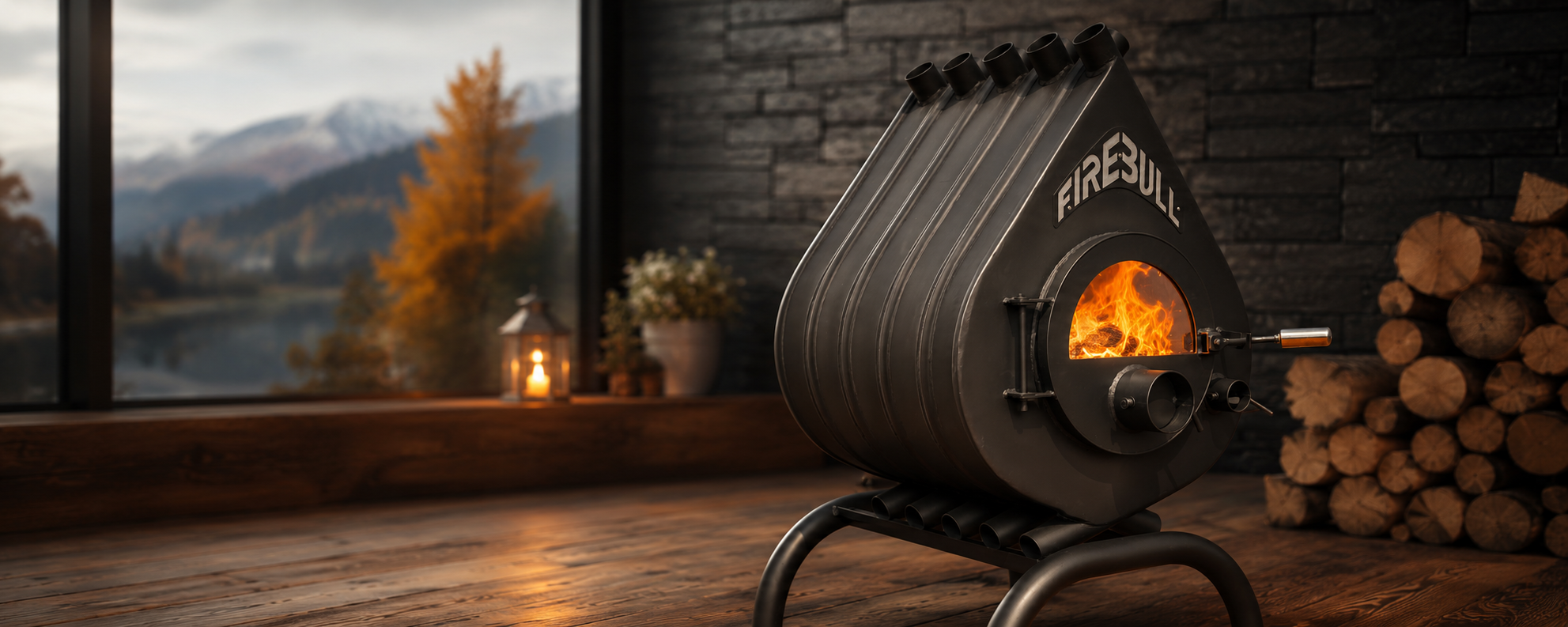
Firebull hot-air stoves are used for local heating of spaces such as workshops, production halls, warehouses, cabins, cottages, restaurants, cultural halls, clubhouses, mobile homes, houseboats, boats, site cabins, garages, construction-site buildings, greenhouses, and more. The stoves heat a room not only through their surface but also through hot circulating air flowing from the heat-exchanger tubes. Cold air near the floor is drawn into the tubes that form the stove body, where it is heated and then released back into the room through the top of the tubes. This creates air circulation that quickly and efficiently mixes cold and warm air throughout the room.
Firebull stoves are equipped with both front and rear primary combustion air inlets, as well as a secondary air supply. The heat output is controlled by dampers.
Firebull stoves also feature a secondary combustion system (CB system). Tertiary combustion air is supplied from the front part of the stove through a long channel to nozzles located beneath the deflector. The length of this channel ensures a high level of preheating of the tertiary air, which enables the gasification of emissions and volatile gases in the upper part of the combustion chamber. The result is environmentally friendly and economical combustion. Without preheating the tertiary air, the CB system does not operate reliably and may not function at all.